








Shape Memory Aligners: ActiveMemory™ vs. Graphy Tera Harz
Both LuxCreo and Graphy make direct-print aligner resins with shape memory. They are tuned to different temperatures, and that changes how each aligner behaves in the mouth. This page compares the two materials on published data.
What is the difference between ActiveMemory™ and Tera Harz?
Both are shape memory polymers that return to their printed shape when heated. The main difference is the temperature that triggers recovery. LuxCreo’s ActiveMemory™ polymer is reactivated in hot water above about 60°C and stays rigid at mouth temperature. Graphy’s Tera Harz TC-85 softens above about 45°C, closer to mouth temperature, and is described as correcting small deformations while it is worn.
What a shape memory aligner is
A shape memory aligner is printed directly in its final shape from a resin that “remembers” that shape. Heat above a set temperature lets the material recover its printed geometry after it has been bent or stretched, for example by putting it in and taking it out.
Conventional thermoformed aligners cannot do this. Their plastic relaxes during wear and does not return to its original shape. Shape memory resins were developed to keep the aligner’s designed fit and force for longer. For the wider picture of how these aligners are made, see the direct-print aligner guide.
About 60°C vs. about 45°C: what it means clinically
The trigger temperature sets where the material sits relative to the 37°C of the mouth. Each choice has a clinical logic.
Rigid in the mouth, reset on demand
With a trigger well above body temperature, the aligner stays stiff while it is worn. In laboratory testing, DCA resin’s stiffness fell only 8.4% between room temperature and 37°C, and its glass transition temperature is 118°C. The patient restores the shape and force with a brief hot-water soak, so recovery happens at a set time rather than continuously.
- Firm grip for controlled tooth movement
- Shape and force restored with each soak
- Recovery is a deliberate step in the care routine
Closer to mouth temperature
Graphy states that TC-85 softens in water above 45°C and recovers its planned shape, with 96% recovery within an hour. A 2024 clinical status report in the Journal of Clinical Orthodontics describes deformation from insertion and removal self-correcting while the aligner is worn, and Graphy reports a roughly constant force of about 1 N.
- Softens with warm water for easier seating
- Described as self-correcting during wear
- Gentle, roughly constant force (manufacturer-reported)
Neither approach is universally better. The right material depends on the treatment plan, the clinician’s preference for stiffness versus flexibility, and how the practice wants patients to care for their aligners.
ActiveMemory™ vs. Tera Harz at a glance
| Attribute | LuxCreo ActiveMemory™ (DCA resin) | Graphy Tera Harz (TC-85) |
|---|---|---|
| Material type | Photocurable shape memory resin | Photocurable shape memory resin |
| Recovery trigger | Hot water above about 60°C | Water above about 45°C |
| Behavior at 37°C | Stays rigid (stiffness down 8.4% from 25°C to 37°C) | Described as self-correcting while worn |
| Glass transition temperature | 118°C | Not stated in Graphy’s fact sheet |
| Reported shape recovery | 99.4% of measured points within ±0.1 mm after reactivation (DCA Plus) | 96% within an hour |
| Reported force behavior | Returns to starting force after each reactivation (in vitro) | About 1 N, roughly constant |
| US regulatory | FDA Class II 510(k); launched April 2023 as an integrated workflow | Tera Harz Clear FDA 510(k) K223355 (2022) and K240597 (2024) |
| EU regulatory | 4D Aligner™ MDR CE Class IIa (announced at IDS 2025) | Class IIa; Graphy reports CE certification under the MDD |
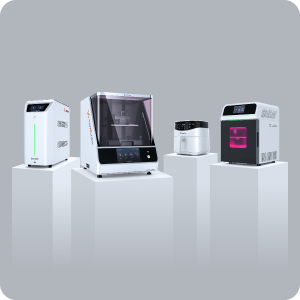
| How it is sold | Part of one system: iLux Pro Dental printer, software, resin, post-processing | Resin used within a specified manufacturing system of scanner, software, printer, and post-cure unit |
LuxCreo data: Retrouvey J-M, APOS Trends in Orthodontics, 2025 (tests run in LuxCreo’s laboratory); LuxCreo product information. Graphy data: Graphy Tera Harz TC-85 fact sheet; Ludwig et al., Journal of Clinical Orthodontics, 2024; FDA 510(k) database. Values come from different test methods and are not a head-to-head study.
Clearance and certification
Both companies hold FDA 510(k) clearances for direct-print aligner materials. Graphy received clearance for Tera Harz Clear in November 2022. LuxCreo’s DCA resin holds FDA Class II 510(k) clearance for an aligner indication, and LuxCreo launched it in April 2023 as part of an integrated printer, software, and material workflow.
In Europe, LuxCreo introduced the 4D Aligner™ at IDS 2025 in Cologne as an MDR CE Class IIa certified direct-printed clear aligner, made with its DCA resin. The MDR is the EU’s current, stricter medical device regulation, which replaced the earlier MDD. For more detail, see FDA Regulatory Clearance.
How reactivation fits the patient routine
Remove and rinse
The patient takes the aligner out and rinses it, as with any clear aligner.
Brief hot-water soak
A short soak in hot water above about 60°C returns an ActiveMemory™ aligner to its printed shape and designed force.
Cool and reseat
Once cool, the aligner is rigid again and goes back in. The 4D Aligner wear and care guide has the full routine.
Shape memory aligner questions
What is a shape memory aligner?
A shape memory aligner is a clear aligner printed directly from a resin that returns to its printed shape when heated above a set temperature. This lets it recover from the bending and stretching of daily wear, which conventional thermoformed plastic cannot do.
What is the difference between ActiveMemory™ and Graphy Tera Harz?
Both are shape memory resins for direct-printed aligners. LuxCreo’s ActiveMemory™ polymer is reactivated in hot water above about 60°C and stays rigid at mouth temperature. Graphy’s Tera Harz TC-85 softens above about 45°C and is described as self-correcting while worn.
Why does the transition temperature matter?
It decides how the aligner behaves at 37°C in the mouth. A higher trigger, as with ActiveMemory™, keeps the aligner stiff during wear, with shape and force restored by a hot-water soak. A trigger closer to mouth temperature, as with Tera Harz, gives a softer aligner that recovers more gradually during wear.
How is an ActiveMemory™ aligner reactivated?
The patient soaks the aligner briefly in hot water above about 60°C. This returns it to its printed shape and designed force. Once it cools, it is rigid again and can be worn.
Are ActiveMemory™ and Tera Harz FDA cleared?
Yes. LuxCreo’s DCA resin holds FDA Class II 510(k) clearance for an aligner indication. Graphy’s Tera Harz Clear is cleared under 510(k) K223355 (2022) and K240597 (2024).
Is the 4D Aligner™ certified in Europe?
Yes. LuxCreo introduced the 4D Aligner™ at IDS 2025 as an MDR CE Class IIa certified direct-printed clear aligner, made with its DCA resin.
See ActiveMemory™ aligners in practice
A LuxCreo specialist can show you how 4D Aligner™ cases are designed, printed, and reactivated, and how the material fits your treatment style.
This comparison uses information published by LuxCreo, Graphy, the FDA, and the cited studies at the time of writing, and is subject to change. LuxCreo is not affiliated with, endorsed by, or sponsored by Graphy Inc. Tera Harz is a trademark of its owner. Confirm current material data and clearances directly with each manufacturer.