






Direct-Print vs Thermoformed Aligners
Clear aligners can be produced in two ways. Thermoforming stretches plastic over a model of the teeth and has been the standard for years. Direct printing 3D prints the aligner itself. The difference changes how much labor, time, and equipment each case requires, and it affects the treatment and fit of the final aligner.
Two ways to make an aligner
How thermoformed aligners are made
For each stage of treatment, a model of the patient's arch is 3D printed or milled. A sheet of clear plastic is heated and vacuum or pressure formed over that model, then trimmed, polished, and finished into an aligner. Every stage needs its own model, and the process involves several manual steps per aligner.
How direct-print aligners are made
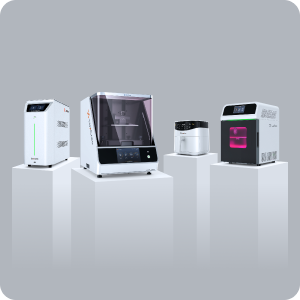
The aligner is printed directly in its final shape from a clear dental resin, with no model and no thermoforming. With LuxCreo, the aligner is printed on the iLux Pro Dental from DCA resin, then washed and cured. LuxCreo's direct-print aligners use an ActiveMemory™ polymer, so a brief hot-water soak reactivates each aligner to its intended shape and original forces.
Compare the two methods
Thermoformed Aligners
A proven, widely used method that shapes heated plastic over a printed or milled model of each treatment stage.
- Models RequiredOne printed or milled model per stage
- Steps Per AlignerPrint model, thermoform, trim, polish, finish
- LaborHigher; multiple manual steps per aligner
- Fit and ConsistencyCan drift or deform from the plan as the plastic wears
- Same-Day DeliveryPossible, but labor-intensive
4D Aligners™
The aligner is printed in its final shape on the iLux Pro Dental, then washed and cured. No model, no thermoforming.
- Models RequiredNone; the aligner is printed directly
- Steps Per AlignerPrint, wash, cure
- LaborLower; LuxCreo reports substantially less active labor per aligner and reduced polishing time
- Fit and ConsistencyLuxCreo reports higher dimensional accuracy and, with ActiveMemory™ polymer, a self-correcting reset to the original shape
- Same-Day DeliveryDesigned for same-day, high-volume production — up to 12 aligners per build on the iLux Pro Dental
Expand what you can design
Design each appliance for the patient, not the process
With direct-print 4D Aligners™, clinicians can move beyond the limitations of thermoformed aligners and design each appliance specifically for the patient's needs. Incorporate advanced special designs such as pontics, precision bite ramps, occlusal cutouts, twin blocks, eruption windows, and other customized features to expand treatment possibilities and confidently address more complex cases.
Combined with LuxCreo's proprietary ActiveMemory™ Polymer, 4D Aligners™ deliver consistent, sustained force throughout treatment by maintaining their intended shape over time. The result is greater clinical control, enhanced treatment flexibility, and a smarter approach to orthodontics that empowers clinicians to achieve predictable outcomes across a wider range of cases.
How to choose
Thermoforming
A proven, widely used method. Many practices already own model printers and thermoforming equipment, so the workflow is familiar and the equipment is already paid for.
Direct printing
Removes the model and thermoforming step, which reduces labor and turnaround and gives the practice more control over production. For practices focused on aligners and same-day delivery, direct printing is the more efficient path. LuxCreo is currently the only FDA-cleared direct-print aligner system. See how in-house direct printing compares with Invisalign.
Product specifications and pricing reflect publicly available manufacturer information and are approximate. Confirm current figures before publishing.
Fewer steps, same day
Thermoforming works, and it will keep working. But every stage still needs its own model and its own set of manual steps. Direct printing takes both out of the workflow: print, wash, cure. If your practice is built around aligners and same-day delivery, that is the shorter path.