






Direct-Print Aligners: The Complete Guide
What direct-print aligners are, how they differ from thermoformed aligners, the ActiveMemory™ polymer science behind LuxCreo’s 4D Aligner™, published accuracy data, and what each aligner costs to make in-house.
What is a direct-print aligner?
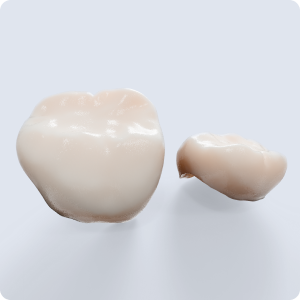
A direct-print aligner is a clear aligner that is 3D printed in its final shape from a clear dental resin, with no physical model and no thermoforming. The aligner is designed digitally from an intraoral scan, printed, washed, and cured. LuxCreo’s 4D Aligner™ is printed from DCA resin, an ActiveMemory™ polymer that can be reactivated to its designed shape with a brief hot-water soak.
From scan to aligner in one digital workflow
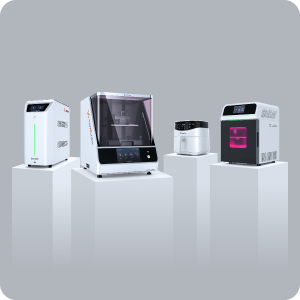
Thermoformed aligners need a printed model for every stage of treatment. Direct printing removes the model, the forming, and most of the trimming and polishing. With LuxCreo, the workflow runs on one integrated system of software, printer, resin, and post-processing.
Scan and design
An intraoral scan is imported and the treatment is planned in LuxDesign, including the aligner’s thickness in each region and any special features.
Aligners are printed from DCA resin on the iLux Pro Dental, a DLP printer with 50-micron resolution. It prints up to 12 aligners in a single build.
Wash, cure, deliver
Aligners are cleaned in the iLuxWash Dental and cured in the iLuxCure Pro. LuxCreo reports delivery within hours of the scan, so same-day starts are possible.
Spec comparison: direct-print vs. thermoformed aligners
The main difference is what gets made. Thermoforming makes a model and forms plastic over it. Direct printing makes the aligner itself. That changes labor, material use, thickness control, and how the aligner holds its shape. For a full walkthrough of both processes, see Direct-Print vs. Thermoformed Aligners.
| Attribute | Direct-print (LuxCreo 4D Aligner™) | Thermoformed |
|---|---|---|
| How it is made | Printed in final shape from DCA resin | Plastic sheet heated and formed over a model |
| Models needed | None | One per treatment stage |
| Steps per aligner | Print, wash, cure | Print model, thermoform, trim, polish, finish |
| Hands-on labor per aligner* | About 1.5 minutes | About 5.5 minutes |
| Material cost per aligner* | About $4.67 | About $6.92 |
| Estimated total cost per aligner* | About $12.47 | About $15.87 |
| Thickness | Variable thickness, designed by region | Set by the plastic sheet, thins as it stretches |
| Shape over wear | Reactivated to designed shape with a hot-water soak | Stress relaxes during wear; no way to reset |
| Batch capacity | Up to 12 per build; up to 64 per 8-hour shift | Depends on equipment and staff time |
| Special designs | Pontics, bite ramps, occlusal cutouts, twin blocks, eruption windows | Limited by the forming process |
| Regulatory | DCA resin: FDA Class II 510(k). 4D Aligner™: MDR CE Class IIa | Varies by material and manufacturer |
*Labor and cost figures are LuxCreo’s published per-aligner estimates. They exclude equipment, and actual costs depend on case mix, volume, and local pricing. See the cost section below.
ActiveMemory™ polymer: why the aligner keeps its shape
Every clear aligner works by holding a planned shape against the teeth. Thermoplastic aligners lose part of that force as they are worn. In a 24-hour in vitro study of four aligner materials, stress release was greatest during the first 8 hours, and could exceed half of the starting stress in the early hours of wear (Lombardo et al., Angle Orthodontist, 2017).
ActiveMemory™ polymer is a shape-memory material. LuxCreo’s DCA resin is printed in the aligner’s designed shape, and that shape becomes the one the material returns to. When the aligner is soaked in hot water, above about 60°C, it recovers its printed geometry and the forces it was designed to apply.
118°C glass transition
DCA’s glass transition temperature is 118°C, well above body temperature. Its stiffness fell only 8.4% between room temperature and 37°C.
99.4% within ±0.1 mm
After deformation and thermal reactivation, 99.4% of measured points on a DCA Plus aligner returned within ±0.1 mm of the original shape, and 95.8% within ±0.05 mm.
Force resets each cycle
In 5 days of 24-hour cycles, force decayed during each cycle and returned to its starting level after each reactivation.
Material data from Retrouvey J-M, “Assessment of active memory of photo-curable resins for LuxCreo DCA direct-printed 3D aligners,” APOS Trends in Orthodontics, 2025. Tests were run in LuxCreo’s laboratory with small samples, and the author, a company consultant, calls for further independent research. For resin details, see Resin & Material Compatibility.
How accurate are direct-print aligners?
Accuracy depends on the printer, the resin, and post-processing. These are the figures available for LuxCreo’s system and for direct-printed aligners in published research.
50-micron resolution
The iLux Pro Dental is a DLP printer with 50-micron pixel resolution, built on LuxCreo’s LEAP™ platform. LuxCreo reports a 99% first-pass yield.
±0.1 mm shape recovery
99.4% of measured points returned within ±0.1 mm after reactivation in the 2025 DCA Plus study, so the aligner keeps its fit over the wear period.
Within 0.25 mm
An independent in vitro study of direct-printed aligners (a different resin and printer) found all post-cured aligners within the 0.25 mm clinical limit (Kanase et al., Australasian Orthodontic Journal, 2024).
Proper curing matters. The same 2024 study concluded that post-print UV curing is essential for direct-printed aligners, which is why wash and cure are fixed steps in the LuxCreo workflow.
What does a direct-print aligner cost to make?
LuxCreo’s published cost model puts an in-house direct-print aligner at about $12.47, against about $15.87 for a thermoformed aligner, a difference of about $3.40, or roughly 21%. Most of the gap comes from material and labor.
| Cost component | Direct-print | Thermoformed |
|---|---|---|
| Material | About $4.67 (DCA resin) | About $6.92 (thermoforming plastic) |
| Hands-on labor | About 1.5 minutes | About 5.5 minutes |
| Design software | About $5 per case | About $5 per case |
| Estimated total per aligner | About $12.47 | About $15.87 |
Practice data points the same way. In a documented practice study, Dr. Bill Layman reported close to 20% savings in labor, material, and yield costs after switching from thermoformed to direct-print aligners, and more than 40% higher weekly aligner production with the same labor hours. See Real Results.
These are estimates, not a price quote. They exclude printer and post-processing equipment, financing, and service. LuxCreo prices systems by configuration, so model your own numbers with the ROI calculator and see Pricing.
FDA clearance and CE certification
FDA Class II 510(k)
LuxCreo’s DCA resin holds FDA Class II 510(k) clearance for an aligner indication. In April 2023, LuxCreo launched it as part of an integrated direct-print workflow with the iLux Pro Dental, design software, and iLuxCure Pro.
MDR CE Class IIa
At IDS 2025 in Cologne, LuxCreo introduced the 4D Aligner™ as an MDR CE Class IIa certified direct-printed clear aligner, made with its DCA resin.
Clearance details
Read what 510(k) clearance covers and how it differs from FDA approval.
FDA Regulatory Clearance →What direct printing makes possible
Because the aligner is printed rather than formed, its geometry is not limited by a plastic sheet stretched over a model. Thickness can vary by region, and features can be built into the aligner itself, including pontics, precision bite ramps, occlusal cutouts, twin blocks, and eruption windows.
Direct-print aligner questions
What is a direct-print aligner?
A direct-print aligner is a clear aligner that is 3D printed in its final shape from a clear dental resin, instead of being thermoformed over a printed model. It is designed from an intraoral scan, printed, washed, and cured.
How is a direct-print aligner different from a thermoformed aligner?
A thermoformed aligner is made by heating a plastic sheet over a model of each treatment stage, then trimming and polishing it. A direct-print aligner needs no model and no forming. Its thickness can vary by region, and with ActiveMemory™ polymer it can be reactivated to its designed shape.
Are direct-print aligners FDA cleared?
Yes, specific materials are. LuxCreo’s DCA resin holds FDA Class II 510(k) clearance for an aligner indication, and the 4D Aligner™ is MDR CE Class IIa certified in Europe. Other companies also hold 510(k) clearances for direct-print aligner materials.
How accurate are direct-print aligners?
The iLux Pro Dental prints at 50-micron resolution. In a 2025 study, 99.4% of measured points on a DCA Plus aligner returned within ±0.1 mm of the original shape after thermal reactivation. An independent 2024 study found post-cured direct-printed aligners within a 0.25 mm clinical limit.
How much does a direct-print aligner cost to make?
LuxCreo’s published cost model estimates about $12.47 per direct-print aligner, compared with about $15.87 for a thermoformed aligner. The estimate excludes equipment, and actual cost depends on case mix and volume. LuxCreo quotes systems by configuration.
What is ActiveMemory™ polymer?
ActiveMemory™ polymer is LuxCreo’s shape-memory aligner material, used in DCA resin. It stays rigid at body temperature, and a brief soak in hot water, above about 60°C, returns the aligner to its printed shape and restores its designed forces.
How long does it take to make a direct-print aligner?
LuxCreo reports that aligners can be delivered within hours of the intraoral scan, which makes same-day starts possible. The iLux Pro Dental prints up to 12 aligners per build and up to 64 aligners in an 8-hour shift.
See direct-print aligners in your workflow
A LuxCreo specialist can walk you through the 4D Aligner™ workflow, the equipment, and what production would cost for your case volume.
Figures on this page reflect information published by LuxCreo and the cited studies at the time of writing and are subject to change. Cost figures are estimates, not a quote, and results vary by practice. Confirm current specifications, clearances, and pricing directly with LuxCreo.