







How to Choose the Best 3D Printer for Dentures
According to the American College of Prosthodontists, more than 36 million Americans suffer from edentulism, with this number projected to increase significantly over the coming decades. As the demand for dentures continues to grow, dental professionals are increasingly turning to digital manufacturing solutions to meet patient needs more efficiently and cost-effectively. The best 3D printer for dentures must balance speed, accuracy, material compatibility, and workflow integration to deliver superior patient outcomes while maximizing practice profitability.
The traditional denture fabrication process, requiring multiple patient appointments, manual labor-intensive steps, and weeks of turnaround time, is rapidly being replaced by digital workflows that can produce high-quality dentures in hours rather than weeks. This transformation represents one of the most significant advances in prosthetic dentistry, offering benefits for both practitioners and patients through improved accuracy, reduced costs, and enhanced patient satisfaction.
Understanding Digital Denture DLP vs SLA vs Multi-Jet Printing Technologies
When selecting the best 3D printer for dentures, understanding the different printing technologies is crucial. Digital Light Processing (DLP) printers have emerged as the leading choice for dental applications, offering superior speed and accuracy compared to traditional Stereolithography (SLA) systems. DLP technology projects entire layers simultaneously, enabling faster print times and better surface finish quality, which is essential for denture applications.LuxCreo is exclusively focused on advancing DLP through its LEAP™ platform, delivering unmatched speed, accuracy, and surface quality for production environments.
Critical Material Considerations for Denture Applications
Biocompatible Resin Requirements
All of the denture resins shown below are fully compatible with and validated for use on the iLux Pro Dental desktop DLP 3D printer, enabling seamless, in-office production of high-quality dentures:
- Rodin Try-In – Quick physical trial sets printed chairside to verify fit before final fabrication
- Rodin Titan – High-strength trial resin for prototype testing and patient approval
- Rodin DB 2.0 – Ceramic-reinforced denture base resin with >200 MPa biaxial flexural strength and ultra-low shrinkage
- Flexcera Base Ultra+ – PMMA-based denture resin offering 110 MPa flexural strength, <0.3% water absorption, and superior wear resistance
- Flexcera Smile Ultra+ – Stain-resistant, impact-tough denture resin with Shore D 80 hardness for long-lasting aesthetics
By pairing these industry-leading materials with the iLux Pro Dental’s LEAP™ platform and optimized print parameters, practices can achieve exceptional accuracy (30–50 µm tolerance), minimal support structures, and rapid cycle times—delivering same-day removable and All-on-X dentures with dramatically reduced post-processing and polishing requirements.
Essential Features for Denture 3D Printers
Accuracy and Precision Requirements
Denture applications demand exceptional accuracy, typically requiring tolerances within 30-50 microns to ensure proper fit and patient comfort. The best dental 3D printers achieve 99% dimensional accuracy compared to CAD designs, with minimal variation between horizontal and vertical printing orientations.
Modern systems like LuxCreo’s LEAP™ (Light Enabled Additive Production) technology deliver industry-leading accuracy while maintaining high-speed production capabilities. This combination of speed and precision is essential for practices offering same-day denture services.
Vertical printing orientation enables higher batch sizes but requires longer print times, while horizontal orientation offers faster cycles with smaller batch quantities. The optimal choice depends on practice volume requirements and turnaround time goals.
LuxCreo’s LuxFlow software specifically enhances denture production through intelligent support generation algorithms that minimize support structures by up to 90%, automated denture-specific positioning, and 1-Click workflow processing that reduces preparation time to under 5 minutes. This tailored approach to denture printing significantly reduces post-processing requirements and material waste while enabling batch production of up to 16 denture arches per print job on the iLux Pro Dental system.
Streamlined Post-Processing Requirements
The best 3D printers for dentures minimize post-processing requirements through advanced printing technologies and optimized materials. Systems featuring digital polishing technology can reduce manual finishing labor by up to 90%, significantly improving production efficiency and profitability. LuxCreo’s LuxFlow 1-Click software streamlines denture preparation with automated orientation, support generation, and nesting tailored for each appliance. Requiring no specialized skills and less than 5 minutes of training, the system delivers 60%-90% less support structures while maintaining optimized printing quality, taking the guesswork out of dental 3D printing.
Modern workflows eliminate many traditional post-processing steps such as extensive support removal, multiple washing cycles, and lengthy curing procedures. Some advanced systems like LuxCreo produce dentures that require less than one minute of finishing work per arch.
Recommended 3D Printer Systems for In-Office Dentures Solutions
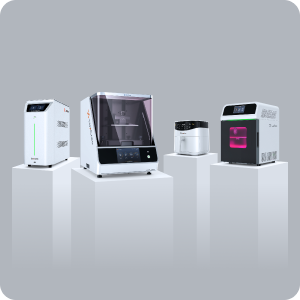
LuxCreo iLux Pro Dental Printer combines desktop convenience with industrial-grade performance, offering high-speed printing capabilities and compatibility with advanced dental resins. The system’s compact design makes it suitable for chairside installation while maintaining production-level throughput.Additionally, iLux Pro Dental features an open resin ecosystem compatible with third-party materials from leading manufacturers including Keystone, Dreve, Glidewell, Rodin, Flexcera, and DETAX, providing practitioners with enhanced flexibility and material choices beyond LuxCreo’s proprietary resins.
Economic Considerations and ROI Analysis
Cost Comparison Analysis LuxCreo’s fully digital denture workflow delivers substantial cost savings compared to conventional and hybrid manufacturing methods. By integrating proprietary hardware, software, and biocompatible resins into a streamlined “1-Click” process, LuxCreo solutions reduce material waste by up to 90 percent and cut labor time by more than 50 percent. As a result, total per-case costs drop dramatically:
- Traditional poured dentures (impression, model, flasking, packing, processing): $95 total cost (materials + labor)
- Milled dentures (CAD/CAM milling of base and post-processed teeth): $98 total cost
- 3D-printed base with stock teeth (digital print of base, manual placement of prefabricated teeth): $60 total cost
- Fully 3D-printed dentures (monolithic print of base and teeth, minimal post-processing): $35–39 total cost
These figures reflect LuxCreo’s material efficiency and automated post-processing advantages, eliminating artisan steps such as manual packing and extensive polishing.
Investment Recovery Timeframes Practices incorporating LuxCreo’s iLux Pro systems realize rapid return on investment. With just two to three dentures produced per day, annual savings in materials and labor exceed $30,000(Data is unverified and provided for reference only) compared to traditional workflows. High-speed printing—up to 16 arches in under two hours—further amplifies throughput without proportional increases in staffing costs.
- Moderate-volume practices (5–10 dentures per week) typically recoup equipment and training expenses within 12–18 months.
- High-volume dental labs (20+ dentures per week) often achieve break-even in under 12 months, driven by batch printing capacity and reduced per-unit overhead.
By shifting to LuxCreo’s automated digital denture solution, practices not only enhance service offerings—enabling same-day or next-day delivery—but also unlock significant long-term profitability through lower consumable use, decreased labor requirements, and scalable production capacity.
Making the Right Choice for Your Practice
Selecting the best 3D printer for dentures requires careful evaluation of practice-specific factors including patient volume, desired service offerings, existing infrastructure, and growth objectives. Successful implementation depends on choosing systems that provide appropriate capacity, reliable operation, and comprehensive support resources.
The key to success lies in selecting a comprehensive solution that includes validated hardware, materials, software, and support services. Leading manufacturers like LuxCreo provide complete ecosystems designed to ensure optimal results from day one.
LuxCreo’s distinctive advantage lies in its 1-Click workflow that streamlines the entire process from design to finish across 18 supported resins and 11 dental indications including dentures. With extensive validation delivering optimal support structure, orientation, and print accuracy, practitioners can achieve professional results with just 5 minutes of training—LuxCreo has taken the guesswork out of dental 3D printing entirely.
As digital dentistry continues to evolve, 3D printing technology will play an increasingly central role in denture production. Practices that embrace these technologies today will be well-positioned to deliver superior patient care while building more efficient and profitable operations for the future. The question is not whether to adopt digital denture technology, but rather which system will best serve your specific needs and growth objectives.
Subscribe to Our Newsletter
Be the first to get our latest updates and free trials!
Popular Resources




Follow Us


Featured Products
4D Aligner™
First Smart ActiveMemory™
Aligner
iLux Pro Dental Solution
Ultimate 1-Click Dental
Application Solution

LuxCloud Dental
Your One-stop Digital Dentistry
Platform