





What are Direct-Printed Aligners?
After decades of reliance on outsourced lab production and thermoformed plastic trays, a new generation of direct-printed aligners is redefining what’s possible in modern dental practice. What was once a 2-4 week process has collapsed into a 2-3 hour same-day workflow. What required multiple appointment visits is now achievable with fewer corrections. And what patients endured as bulky, uncomfortable plastic has evolved into intelligent, shape-memory appliances that feel like new every single day.
Direct-printed aligners represent far more than incremental improvement—they. They’re a paradigm shift in clear aligner therapy. This comprehensive guide explores the technology, benefits, clinical advantages, and transformative impact of direct-printed aligners on modern orthodontic practice.
What Are Direct-Printed Aligners?
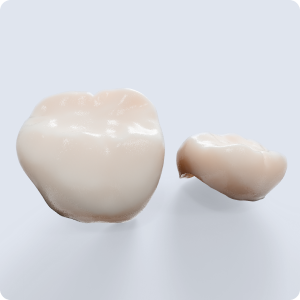
Direct-printed aligners are custom orthodontic appliances fabricated layer-by-layer directly from biocompatible photopolymer resins using digital light processing (DLP) 3D printing technology. Unlike traditional thermoformed aligners, which require physical model production and vacuum-forming over those models, direct-printed aligners are created directly from digital treatment plans without any intermediate manufacturing steps.
The workflow is elegantly simple:
- Intraoral scan software captures the patient’s dentition
- Treatment planning software auto-generates tooth movement sequences
- CAD software designs the final aligner shell
- 3D printer fabricates the appliance in a single build
- Post-processing equipment washes and cures the aligner
- Patient receives their custom appliance—all within 2-3 hours
This end-to-end digital process eliminates dependency on external labs, physical models, and multi-step thermoforming, placing complete control directly into the hands of dental practitioners.
The Evolution: From Braces to Direct Printing
Orthodontic innovation spans centuries, but the acceleration toward digital solutions has been dramatic:
Historical Context:
- 1728: French dentist Pierre Fauchard published the first systematic approaches to straightening teeth
- 1900s: Orthodontists began using gold, platinum, silver, and steel to form braces
- 1960s: Stainless-steel braces became the standard of care
- 1998: Invisalign received FDA clearance, introducing thermoformed clear aligners to mainstream practice
- Early 2010s: Digital intraoral scanners and CAD treatment planning automated early workflow stages, yet production still relied on external labs
- 2022: LuxCreo received the first FDA Class II 510(k) clearance for direct-printed aligners—a watershed moment marking the elimination of physical models and ushering in true chairside production
This evolution represents a complete revolution: from analog metal brackets, to thermoformed plastic trays, to intelligent, digitally designed and fabricated aligners produced in-office in hours.
How Direct-Printed Aligners Work: The Technology Behind the Innovation
The Role of ActiveMemory™ Polymer
At the heart of advanced direct-printed aligners lies a fundamentally different material: ActiveMemory™ Polymer (AMP)—a photocurable resin engineered specifically for orthodontic applications.
Unlike traditional thermoformed plastics (PET-G, TPU), which suffer from irreversible deformation and rapid force decay, ActiveMemory™ Polymer employs a dual-mechanism architecture that decouples intraoral stiffness from external thermal restoration.
How It Works:
- Hard Segment: Maintains stable elastic modulus across intraoral (37°C) and ambient (25°C) temperatures—varying by less than 10%. This ensures consistent, predictable force delivery throughout wear.
- Soft Segment: Allows reversible deformation under orthodontic load, absorbing tooth-movement pressures without permanent damage.
- Shape Memory Activation: When immersed in hot water (>60°C), the polymer fully restores its original geometry within 0.1mm tolerance and recovers its initial force profile—reliably, across multiple activation cycles.
The Breakthrough: This means that traditional aligners gradually weaken as they’re worn, forcing clinicians to replace them frequently with successively stronger trays. ActiveMemory™ aligners, by contrast, restore their original strength daily through a simple hot-water soak. Patients can feel the difference: it’s equivalent to wearing a fresh, newly fabricated aligner every single day.
Direct 3D Printing Process
Direct printing builds aligners layer by layer using Digital Light Processing (DLP) technology:
- Design to Print: Treatment plans are processed through CAD software (LuxDesign) to generate printable models with clinician-controlled parameters for thickness, offset, and attachment placement.
- Print Preparation: Slicing software (LuxFlow) automatically inspects and repairs mesh files, generates optimized support structures, and orients each aligner for maximum accuracy and minimal material usage.
- Layer-by-Layer Fabrication: A DLP printer selectively cures thin resin layers (typically 25-50 microns), building the complete aligner geometry in a single uninterrupted build.
- Precision Control: Because resin is added layer-by-layer, thickness can be precisely controlled across different regions—thin at the gingival margin for comfort, thick at the incisal edge for force delivery. This “variable thickness” capability is impossible with thermoforming.
- Post-Processing: Automated washing (iLuxWash™) removes uncured resin, followed by UV curing (iLuxCure™) to complete polymerization. Advanced Digital Polishing™ technology delivers 80% higher optical clarity while reducing manual polishing time by 75%.
Key Workflow: From Scan to Same-Day Smile
LuxCreo’s integrated ecosystem demonstrates how direct printing collapses treatment timelines from weeks to hours.
Step 1: Digital Scanning and Virtual Setup
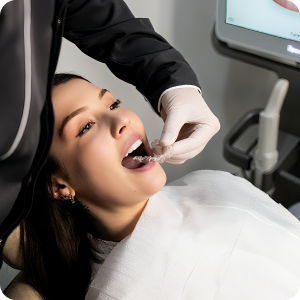
A high-resolution intraoral scan software captures the patient’s dentition in minutes, producing a precise 3D digital model. Treatment planning software (compatible with 3Shape, Ulab, Titan, and other industry-standard platforms) auto-generates tooth movement sequences and aligner staging—eliminating the need for physical stone models.
Step 2: LuxDesign – One-Click Aligner Shell Creation
Clinicians import the treatment plan into LuxDesign CAD software, where AI-driven automation handles:
- Gap filling: Automatically seals interproximal spaces
- Trimline generation: Creates optimal borders for retention and comfort
- Customized thickness mapping: Assigns variable thickness to each zone (e.g., thicker at canines for rotational control, thinner at molars for comfort)
- Attachment placement: Positions auxiliary devices exactly where needed
All of this happens in a single click, with clinicians retaining full override authority to customize any parameter.
Step 3: LuxFlow – Automated Print Preparation
LuxFlow software automates every pre-print step:
- Inspects and repairs STL geometry automatically
- Generates intelligent support structures optimized for easy removal
- Positions aligners for maximum print accuracy
- Applies resin-specific print parameters
- Batches multiple aligners for simultaneous printing
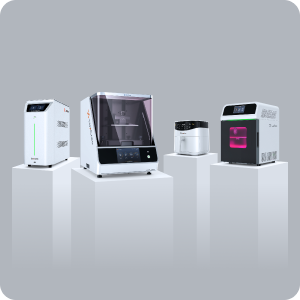
Step 4: Direct 3D Printing with iLux Pro Dental 3D Printer
The iLux Pro Dental printer—engineered specifically for dental applications—fabricates the aligners with:
- 50 micron pixel accuracy for precise fit
- Capacity for up to 12 aligners per build for high-volume practices
- High-speed production enabling same-day delivery
Step 5: Automated Post-Processing
- iLuxWash Dental™: Removes uncured resin via ultrasonic agitation with heating
- iLuxCure Pro™: Delivers 360° UV curing at 405-385nm wavelength with heating to optimize mechanical properties
- Support removal and polishing: Automated systems trim and polish edges to patient-ready condition
Step 6: Thermal Activation and Patient Delivery
Patients can perform a simple hot-water soak (>60°C) to activate the aligner’s shape memory, ensuring it restores its original geometry and force profile. Patients can also use LuxCreo’s REJUV™ kit to both reactivate the aligner’s strength, and clean it at the same time.
Total time: Approximately 2-3 hours from scan to delivery.
Material Science: ActiveMemory™ Polymer vs. Thermoformed Plastics
A detailed comparison reveals why ActiveMemory™ Polymer represents a fundamental advancement:
| Property | Thermoformed Plastics (PET-G, TPU) | ActiveMemory™ Polymer |
| Elastic Modulus Stability | Significant creep and decay under oral stress | <10% variation between 25°C and 37°C |
| Force Retention | Rapid, irreversible force loss over time | Sustained elastic force throughout wear cycle |
| Load-Deflection Behavior | High initial force; rapid decay | Optimal initial force; stable profile |
| Permanent Deformation | Occurs under sustained intraoral stress (37°C, >95% humidity) | Reversible deformation; full recovery via thermal activation |
| Shape Memory | No shape memory capability | Full geometric restoration within 0.1mm via hot water (>60°C) |
| Thickness Precision | Variable, uncontrollable thickness variations from thermoforming | Precise thickness control; variable thickness designs possible |
| Water Absorption | Hydrolysis weakens structure over time | Engineered for hydrolysis resistance |
| Clinical Predictability | Unpredictable due to material variability | Highly predictable; minimal deviations from digital plan |
Bottom Line: ActiveMemory™ Polymer overcomes every inherent limitation of thermoformed plastics. It’s not an incremental improvement—it’s a different class of material engineered specifically for the demands of modern orthodontics.
Conclusion: The New Standard of Care
Direct-printed aligners represent a watershed moment in orthodontics. They eliminate outdated workflows, restore clinician autonomy, reduce patient wait times, enhance treatment outcomes, and improve practice profitability—simultaneously.
The shift from thermoformed aligners to direct printing mirrors previous paradigm shifts in dentistry: from analog to digital, from lab-dependent to chairside production, from reactive to predictive treatment planning.
For orthodontists, dental labs, and DSOs, the question is no longer whether to adopt direct printing, but when and how to optimize implementation.
Those who embrace this transition position themselves as technology leaders, delivering superior patient experiences and building increasingly profitable, efficient practices. For patients, direct-printed aligners mean faster treatment, better comfort, and more predictable results—delivered in a modern, efficient, chairside workflow that respects their time and preferences.
The future of orthodontics is direct-printed, and that future is now.
Subscribe to Our Newsletter
Be the first to get our latest updates and free trials!
Popular Resources




Follow Us


Featured Products
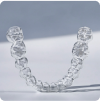
4D Aligner™
First Smart ActiveMemory™
Aligner
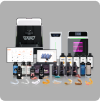
iLux Pro Dental Solution
Ultimate 1-Click Dental
Application Solution

LuxCloud Dental
Your One-stop Digital Dentistry
Platform