






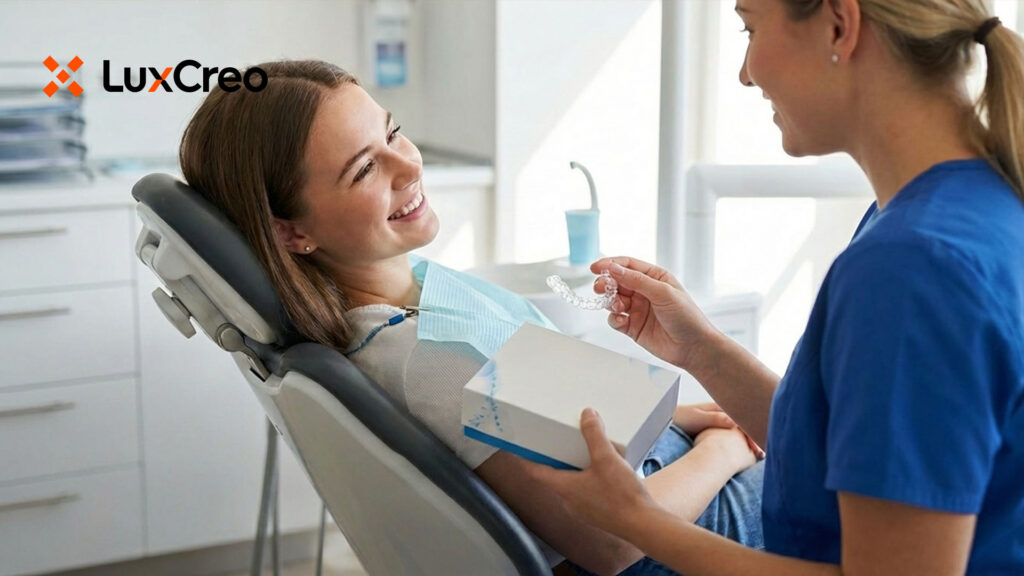
The Future of Orthodontics: How Advanced Dental 3D Printing Solutions Are Redefining Patient Care
The dental industry is undergoing a seismic shift. For decades, the gap between a patient’s initial scan and their final treatment delivery was measured in weeks. Today, it is measured in hours. This revolution is driven by next-generation dental 3D printing solutions that have moved beyond simple model fabrication to the direct production of FDA-cleared medical devices.
As clinics and laboratories seek to modernize their workflows, the definition of a “printing solution” has evolved. It is no longer enough to simply own a 3D printer; success now requires a comprehensive ecosystem involving AI-driven design, smart materials, and automated post-processing. Companies like LuxCreo are at the forefront of this transformation, introducing innovations like Direct Print Aligners and ActiveMemory™ polymers that are rendering traditional methods obsolete.
This comprehensive guide explores the landscape of modern dental 3D printing solutions, detailing how direct printing technology is enhancing clinical outcomes, reducing overhead, and enabling same-day dentistry.
Moving Beyond the “Model”: The Evolution of Digital Dentistry
To understand the current state of dental 3D printing solutions, one must look at where the technology started. For years, dental 3D printers were primarily used for “indirect” manufacturing. A dentist would scan a patient, print a physical model of the teeth (a replacement for the stone cast), and then use a thermoforming machine to suck-down a plastic sheet over that model to create a retainer or aligner.
While this was an improvement over alginate impressions, it remained a flawed process. Thermoforming is inherently analog in its final stage. It introduces material waste, inconsistent plastic thinning during the suck-down process, and a reliance on physical storage. Furthermore, the accuracy of the final aligner was limited by the accuracy of the printed model and the gap between the plastic and the model.
The new era of dental 3D printing solutions is defined by Direct 3D Printing. This technology bypasses the physical model entirely. Using advanced resins and high-resolution DLP (Digital Light Processing) printers, dental professionals can now print the aligner, night guard, or denture directly. This “scan-to-appliance” workflow is the holy grail of digital dentistry, offering a level of precision that analog methods simply cannot match.
Direct Print Aligners: A Paradigm Shift in Orthodontics
The most significant breakthrough in dental 3D printing solutions is the advent of the 4D Aligner™. Unlike traditional clear aligners which are cut from a uniform sheet of plastic, LuxCreo’s direct print aligners are additively manufactured layer by layer. This fundamental change in manufacturing unlocks clinical capabilities that were previously impossible.
Variable Thickness and Precision Control
One of the inherent limitations of thermoformed aligners is uniform thickness. When a plastic sheet is stretched over a molar, it thins out, often becoming weakest where strength is needed most. Conversely, direct printing allows for variable thickness within a single aligner.
With solutions like the LuxCreo 4D Aligner, the software can automatically design the appliance to be thicker in areas requiring higher force application and thinner in sensitive areas to maximize patient comfort. This allows for precise control over orthodontic movements, such as root torque vs. crown tipping, without relying solely on painful attachments.
The End of Attachments?
Traditional aligner therapies often require dentists to glue composite “buttons” or attachments onto a patient’s teeth to give the plastic something to grip. These are unsightly and often uncomfortable for the patient. Because direct printed aligners are built to the exact digital specifications of the tooth surface without the error margin of a thermoforming gap, they offer superior retention. This increased grip often reduces or eliminates the need for attachments, resulting in a more aesthetic “invisible” solution for the patient.
ActiveMemory™ Polymer: Smart Materials Revolution
Hardware is only half of the equation; the chemistry is the other. A premier dental 3D printing solution must utilize materials that function dynamically in the oral environment. This is where ActiveMemory™ Polymer technology changes the game.
Traditional aligner plastics suffer from “stress relaxation,” meaning they lose their force output shortly after being inserted. This is why patients must change trays frequently. In contrast, LuxCreo’s ActiveMemory™ material is designed to maintain consistent force over time.
The “Hot Water” Reboot
Perhaps the most patient-friendly feature of this material is its thermal responsiveness. If a 4D Aligner begins to deform or stain after heavy use, the patient can simply submerge it in hot water. The heat activates the shape-memory properties of the polymer, causing it to revert to its original, printed geometry. This not only ensures that the clinical forces remain active for the duration of wear but also aids in hygiene. This ability to “rejuvenate” the appliance is a unique characteristic of high-end direct printing resins that thermoformed plastics cannot replicate.
For a deeper dive into how these materials compare, you can read about Direct Print Aligner Materials vs. Thermoformed Plastic.
The Hardware Ecosystem: iLux Pro Dental and Digital Polishing™
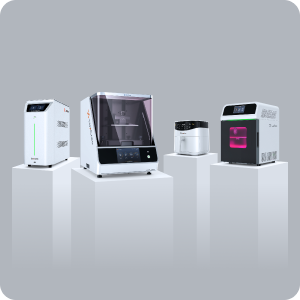
For a dental clinic or lab to adopt dental 3D printing solutions, the workflow must be seamless. The hardware must be fast, accurate, and easy to maintain. The iLux Pro Dental printer exemplifies this balance, offering a desktop footprint with industrial-grade throughput.
However, the bottleneck in 3D printing has rarely been the printing itself—it has been the post-processing. Removing supports, washing sticky resin, and manually buffing appliances to optical clarity can take hours of labor. This labor cost often destroys the ROI for labs and clinics.
Digital Polishing™
LuxCreo has addressed this specific pain point with Digital Polishing™. This proprietary technology creates clear appliances (like splints, guides, and aligners) that come out of the printer already transparent, requiring minimal to no manual polishing. By reducing post-processing labor by up to 75%, clinics can produce appliances that are ready for the patient almost immediately after curing. This efficiency is critical for enabling the “Same-Day Smile” concept.
Comprehensive Workflow
The iLux Pro Dental ecosystem integrates the printer with automated washing and curing stations (iLuxWash and iLuxCure). When combined with the LuxDesign software, which utilizes AI to automate the generation of support structures and orientation, the system becomes a “One-Click” solution. This lowers the barrier to entry, allowing staff members with minimal technical training to operate the machinery effectively.
For a detailed breakdown of hardware options, consult the guide on choosing the best dental 3D printer.
Advanced Features Unlocked by Direct 3D Printing
Reducing Attachments with Custom Multivariable Thickness
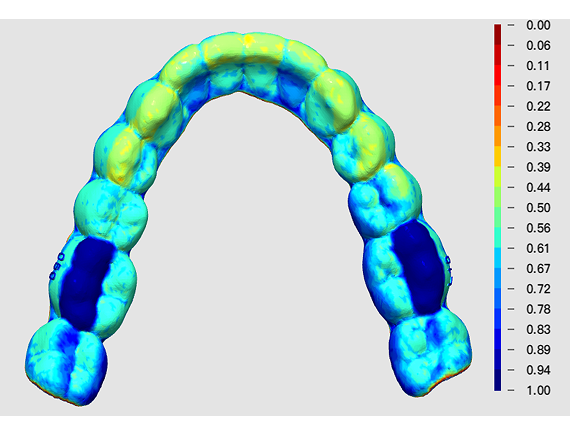
One of the most transformative capabilities of direct print is customized multivariable thickness. LuxCreo’s 4D Aligner™ technology allows us to vary aligner thickness across the appliance in a single print, optimizing force in targeted areas—without relying on composite attachments in some movements.
For doctors and patients alike, that’s a win:
- Fewer attachments = better aesthetics
- Less chair time = more efficient workflow
- Smart force application = more predictable movement
By controlling force through precise material distribution—not bonded hardware—LuxCreo’s aligners are able to deliver powerful, consistent tooth movement while preserving the patient’s natural smile during treatment.
This design precision isn’t just theoretical; it’s backed by real-world clinical performance. Providers report smoother tracking, fewer refinements, and significantly improved patient satisfaction.
Direct-Printed Bite Turbos: Built-In Correction
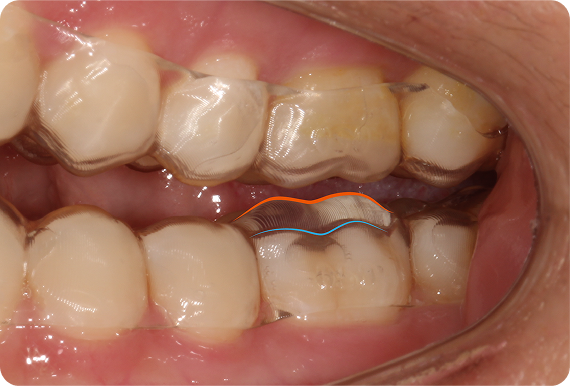
Bite turbos have traditionally required separate material additions or bonding. Now, they can be designed and integrated into the aligner itself with pinpoint accuracy. LuxCreo’s design tools allow for fully customized bite turbos to be integrated directly into the aligner’s anatomy.
Doctors can use these for:
Because these are designed digitally and printed directly, there’s no risk of incorrect placement, dislodgement, or uneven pressure. The turbo becomes part of the aligner—streamlined, stable, and reliable.
Solid Pontics: Stability You Can Count On
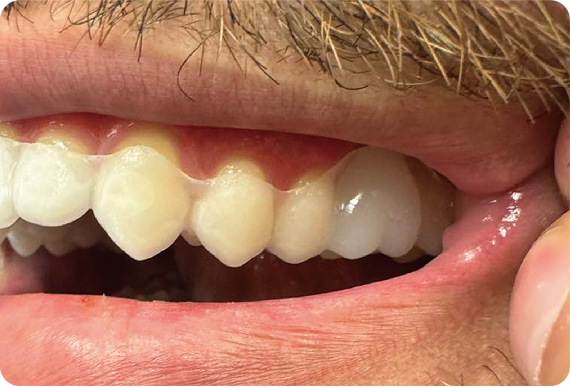
When a patient is missing a tooth, aesthetics matter—but so does functional durability. Traditional pontics in aligners are often hollow or filled with composite chairside. The result? Aesthetic compromises, fragility, and extra steps for the provider.
With LuxCreo’s direct print process, solid pontics are fully printed into the aligner, offering:
- More realistic look and feel
- Structural integrity for eating and speaking
- Better support for adjacent teeth and movement
Because these are designed digitally and printed directly, there’s no risk of incorrect placement, dislodgement, or uneven pressure. The turbo becomes part of the aligner—streamlined, stable, and reliable.
Hollow Aligner Indications: Comfort Meets Control
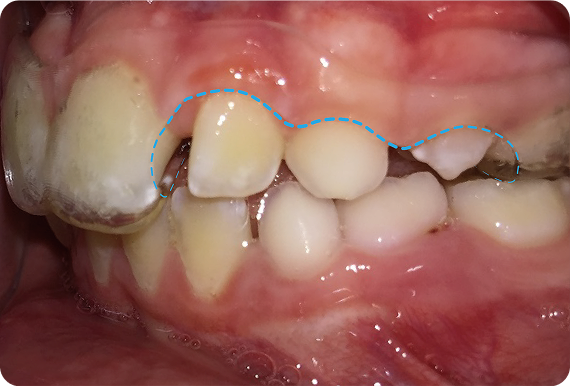
Need eruption guidance or targeted occlusal relief? LuxCreo’s advanced design capabilities support custom hollow aligner zones that fit specific anatomical or treatment needs.
We’ve affectionately nicknamed them “Batman” and “Rabbit”.
These are clinically valuable but previously impossible to manufacture at scale using thermoforming. LuxCreo’s 3D print technology makes these designs accurate, repeatable, and fast to produce.
And because they’re completely digital, you can easily modify, scale, or replicate the designs for any patient need.
Direct-Print Same-Day EMA 3D (Sleep Apnea Solutions)
Obstructive Sleep Apnea (OSA) is a growing health crisis. Traditional treatments involving milled or thermoformed Mandibular Advancement Devices (MADs) are often bulky and take weeks to manufacture. Using the direct print workflow, clinicians can produce the EMA 3D™ appliance.
Because the appliance is printed rather than milled, it can be made significantly thinner (improving patient comfort and compliance) while maintaining the necessary strength. Furthermore, the digital workflow allows for a same-day turnaround, meaning a patient diagnosed with sleep apnea can receive their life-saving device the very next day, rather than waiting weeks for a lab shipment.
Direct-Print Flexible Partial Dentures
The production of partial dentures has historically been a labor-intensive, artisanal process. Modern solutions allow for the 3D printing of flexible partial dentures that offer lab-grade fit and aesthetics with a fraction of the manual labor. This application is particularly valuable for clinics looking to offer affordable, high-quality restorative options to their patient base.
The Business Case: ROI and Lab Fees
Investing in dental 3D printing solutions is not just a clinical decision; it is a financial one. Outsourcing aligners and appliances to large third-party manufacturers incurs significant lab fees and shipping delays.
By bringing production in-house, clinics can slash these costs dramatically. Data suggests that chairside 3D printed aligners can cut lab fees by up to 75%.
Same-Day Delivery as a Marketing Tool
Beyond cost savings, speed is a potent revenue driver. In a competitive market, the ability to offer “Same-Day Starts” is a massive differentiator. A patient who visits for a consultation and receives their first set of aligners or a night guard within hours is far less likely to shop around. The immediate gratification increases case acceptance rates and patient satisfaction.
For dental laboratories, adopting high-throughput dental 3D printing solutions like the Lux 3+ allows for mass customization. Labs can take on more volume without a linear increase in technician headcount, thanks to automation and Digital Polishing™ technology.
Overcoming the “Digital Learning Curve”
A common hesitation among clinicians regarding dental 3D printing solutions is the perceived complexity of the software. “I am a dentist, not an engineer,” is a common sentiment.
Recognizing this, the industry has moved toward cloud-based, AI-driven platforms. LuxCloud Dental and LuxDesign exemplify this shift. These platforms handle the heavy lifting of CAD design. For example, in an aligner workflow, the AI can automatically identify the gingival margin, generate the aligner shell, and position the models on the build platform for optimal printing.
This automation allows the dentist to focus on the treatment plan—the biology and physics of tooth movement—rather than the geometry of 3D printing supports. It democratizes access to advanced manufacturing, making it a viable tool for general practitioners and orthodontists alike.
Choosing the Right Solution
With various manufacturers flooding the market, selecting the right equipment is critical. A proper evaluation should look beyond the sticker price of the printer and consider the “Total Cost of Ownership,” which includes:
- Material Costs: Are you locked into expensive proprietary resins, or does the system support an open ecosystem? (LuxCreo supports both its proprietary high-performance resins and trusted third-party options).
- Labor Costs: Does the printer require extensive manual cleaning and polishing?
- Throughput: Can the printer handle the volume of a busy day?
- Support: Is there a dedicated team to help troubleshoot clinical and technical issues?
For a direct comparison of top brands, the 3D Printer for Dental Clinics Buying Guide offers valuable insights into how LuxCreo stacks up against competitors like SprintRay and Formlabs.
Conclusion
The era of “digital dentistry” has matured into the era of “direct dentistry.” Dental 3D printing solutions have evolved from prototyping tools into essential medical device manufacturing platforms. Whether it is the precision of the 4D Aligner with ActiveMemory™ technology, the comfort of the EMA 3D™ sleep device, or the efficiency of the iLux Pro Dental workflow, these technologies are empowering clinicians to provide better care, faster.
For dental professionals, the question is no longer if they should integrate 3D printing, but how quickly they can adopt a solution that offers direct printing capabilities. By embracing these innovations, practices can take control of their production, reduce dependency on outside labs, and ultimately, deliver more smiles to the world.
To explore the full potential of these technologies, visit LuxCreo and discover how to simplify your digital dentistry journey.
Subscribe to Our Newsletter
Be the first to get our latest updates and free trials!
Popular Resources




Follow Us


Featured Products
4D Aligner™
First Smart ActiveMemory™
Aligner
iLux Pro Dental Solution
Ultimate 1-Click Dental
Application Solution

LuxCloud Dental
Your One-stop Digital Dentistry
Platform