







The Complete Guide to Dental 3D Printing Materials for Clear Aligners: ActiveMemory™ Polymer vs. Thermoformed Plastics
The Evolution of Dental 3D Printing Materials
The clear aligner market represents the fastest-growing segment in dental 3D printing, with the sector projected to reach $29.9 billion by 2030. This explosive growth reflects a fundamental paradigm shift: dental professionals are moving beyond traditional thermoformed plastic aligners to direct 3D printing with advanced resin systems. At the core of this transformation lies materials science—specifically, the development of innovative photopolymer resins engineered for direct printing that deliver superior force retention, clinical predictability, and patient comfort compared to conventional thermoformed materials.
For decades, thermoformed aligners dominated the market. These appliances relied on heating and vacuum-forming sheets of PET-G or TPU plastic over dental models—a process that, while accessible and familiar, introduced inherent material limitations. Patients experienced inconsistent force delivery, frequent refinements were needed to correct fit inaccuracies, and treatment timelines extended due to these material constraints.
Today, FDA-cleared direct 3D printing systems powered by innovative resins—particularly LuxCreo’s ActiveMemory™ polymer—address these fundamental limitations. This comprehensive guide explores the latest dental 3D printing materials, their mechanical properties, biocompatibility profiles, and transformative clinical impact on clear aligner therapy.
Understanding Thermoformed Aligner Materials: Limitations and Clinical Consequences
Traditional Thermoforming Process and Material Characteristics
Thermoformed aligners begin with treatment planning software that generates a series of digital models showing incremental tooth movements of typically 0.25mm per aligner. These digital models are then 3D printed in rigid material, creating physical master dies. Transparent plastic sheets—most commonly made from PETG (polyethylene terephthalate glycol) or TPU (thermoplastic polyurethane)—are then heated to their forming temperature, draped over the printed models, and vacuum-formed under pressure.
Once removed from the forming machine, aligners undergo manual trimming and finishing. This multi-step process, while established for over two decades, introduces several material-related complications that directly impact clinical outcomes.
The Material Science Challenge: Why Thermoformed Plastics Degrade
The fundamental weakness of thermoformed aligners lies in how the materials themselves behave under intraoral conditions. When PETG or TPU polymers are exposed to the warm, moist environment of the mouth—combined with the mechanical stresses of mastication and the constant elastic strain from holding teeth in misalignment—these materials undergo irreversible changes.
Permanent Deformation and Creep: Under sustained intraoral stresses at body temperature (37°C), the polymer chains in thermoformed materials gradually shift positions, a phenomenon known as creep. This causes the appliance to gradually lose its precise shape and, more critically, lose the elastic force that drives tooth movement. Clinical data demonstrates that thermoformed aligners experience force degradation ranging from 25–40% within just 7–10 days of wear. After 14 days, force loss often exceeds 50%, rendering the aligner mechanically ineffective for continued tooth movement.
Uncontrolled Thickness Variation: The thermoforming process creates significant, uncontrollable thickness variations. When a plastic sheet stretches over a dental model—particularly over tall teeth or curved surfaces—the material thins locally. Research has documented that a standard 0.75mm PETG sheet can vary between 0.38–0.69mm after thermoforming, with the thinnest areas occurring precisely where clinicians need the greatest mechanical strength. Since a mere 10% reduction in thickness results in approximately 30% reduction in delivered force, these thickness variations create unpredictable force delivery—a critical limitation in orthodontic applications.
Water Absorption and Hydrolysis: Thermoformed plastics absorb water from oral fluids, gradually degrading the polymer’s structural integrity through hydrolysis. This water absorption weakens the material over time, accelerating deformation and compromising long-term clinical efficacy.
High Initial Force and Patient Discomfort: Thermoformed aligners typically exert excessive initial force when first inserted—creating a “force peak” that many patients experience as significant discomfort during the first 24–48 hours. As the material creeps and loses elasticity, this initial excessive force rapidly decays, leaving patients with inefficient tooth movement during the latter portion of the wear cycle.
Clinical Consequences: Refinements, Delays, and Treatment Uncertainty
These material limitations translate into direct clinical consequences. The force degradation and thickness variations inherent to thermoformed materials mean that tooth movement rarely follows the treatment plan precisely. Many cases require “refinements”—additional aligner sets produced mid-treatment to correct deviations in tooth position. A typical refinement adds 2–4 weeks to treatment duration and increases total treatment cost.
Additionally, the 2–4 week production timeline for thermoformed aligners (including external lab time) delays treatment initiation, reducing patient motivation and case acceptance rates.
Introducing Direct 3D Printing Materials: A Paradigm Shift in Material Science
The Fundamentals of Direct 3D Printed Aligner Materials
Direct 3D printing eliminates the entire thermoforming step entirely. Instead of creating physical models and forming plastic sheets, biocompatible photopolymer resins are directly 3D printed layer by layer—typically using Digital Light Processing (DLP) or MSLA (Masked Array LED) technology—to create the finished aligner in a single manufacturing step.
This direct approach enables fundamentally different material chemistry. While thermoformed materials must balance formability (the ability to stretch and shape under heat) with mechanical properties, direct-print materials can be engineered specifically for the mechanical and optical properties required in a finished aligner, without any thermoforming constraints.
The resulting materials deliver superior performance across multiple dimensions: consistent force delivery, precise thickness control, shape memory recovery, and superior optical clarity.
ActiveMemory™ Polymer: Innovation in Clear Aligner Material Science
LuxCreo’s ActiveMemory™ Polymer (AMP) represents the most advanced clinical implementation of direct-print aligner materials. Unlike conventional photopolymer resins or traditional shape-memory polymers, ActiveMemory™ uses a proprietary dual-mechanism, multi-component architecture specifically engineered for clear aligner therapy.
The Dual-Mechanism Design:
ActiveMemory™ polymers comprise two functional components: a hard segment and a soft segment working in concert. The hard segment maintains a consistent elastic modulus across the intraoral temperature range (37°C) and ambient temperatures (25°C), varying by less than 10%—a dramatic contrast to thermoformed materials that experience significant creep at body temperature.
The soft segment enables reversible deformation under load, allowing the aligner to gently yield to tooth position while the hard component maintains structural stiffness required for force delivery.
Critically, this dual-mechanism design decouples intraoral mechanical stability from post-removal thermal restoration—a fundamental innovation. Unlike conventional shape-memory polymers that soften dramatically (>70% modulus loss) at body temperature, ActiveMemory™ maintains consistent stiffness intraorally while still enabling thermal restoration when heated above 60°C.
Shape and Force Recovery Through Thermal Activation:
A groundbreaking feature of ActiveMemory™ polymers is their ability to fully restore both geometric shape and mechanical force delivery through simple thermal activation. If an aligner undergoes minor deformation during wear—from temperature fluctuations, accidental trauma, or extended wear—patients simply soak the aligner in hot water (above 60°C) for 2–3 minutes. The thermal stimulus reactivates the polymer’s memory mechanisms, causing the aligner to recover its original geometry within 0.1mm precision and regenerate its initial force profile.
This thermal restoration process is repeatable across multiple cycles, meaning each aligner effectively feels “brand new” after daily hot-water soaking—providing consistent force delivery throughout the entire wear cycle.
Mechanical Properties: Quantifying the Difference Between Materials
DCA Resin Specifications and Performance Metrics
LuxCreo’s DCA (Dental Clear Aligner) resin—engineered with ActiveMemory™ technology—delivers mechanical properties specifically optimized for clear aligner applications:
- Tensile Modulus: 990–1200 MPa (providing sufficient stiffness for force delivery while maintaining slight elasticity)
- Tensile Strength at Yield: 23.45 MPa (preventing brittle failure during insertion/removal)
- Flexural Strength: ~38 MPa (resisting bending forces during mastication)
- Shore D Hardness: ~71 D (optimal balance between rigidity and comfort)
- Elongation at Break: 60.44% (preventing sudden fracture)
- Optical Transmission: >90% (delivering crystal-clear transparency for esthetics)
These specifications represent careful engineering: sufficient stiffness to deliver orthodontic forces, adequate elasticity to prevent brittleness, and transparency to maintain aligner esthetics.
Comparative Material Properties: Direct-Print vs. Thermoformed
| Property | ActiveMemory™ Polymer | Thermoformed PETG/TPU |
| Elastic Modulus Variation (25°C–37°C) | <10% | Significant creep & decay |
| Force Retention After 7 Days | 95% | 60–70% (irreversible loss) |
| Thickness Uniformity | ±0.05 mm | ±0.3–0.5 mm |
| Dimensional Accuracy | >96% within ±0.1 mm | 75–80% within ±0.2–0.3 mm |
| Shape & Force Recovery | Full recovery via thermal activation | No recovery capability |
| Optical Clarity | >90% transmission, crystal clear | Variable, requires polishing |
| Patient Comfort Rating | 8.5/10 (consistent force) | 6.5–7.5/10 (force peaks) |
| Load-Deflection Behavior | Optimal initial force, stable profile | Excessive initial force, rapid decay |
The critical differentiator is force retention over time. While thermoformed aligners lose 30–40% of their force within the first week of wear, ActiveMemory™ polymers maintain 95% force retention after 7 days—and crucially, can fully recover lost force through daily thermal activation, providing consistent tooth movement throughout the entire wear cycle.
Biocompatibility and FDA Regulatory Approval
ISO 10993 Standards and Biocompatibility Testing
All materials intended for intraoral contact must comply with ISO 10993, the international standard for biological evaluation of medical devices. This rigorous testing protocol includes:
- Cytotoxicity Testing (ISO 10993-5): Cell culture studies evaluating whether material extracts cause cellular death or dysfunction. Pass threshold: >70% cell viability.
- Oral Mucosal Irritation Assessment: Testing direct contact between material and oral tissues for localized inflammation or ulceration.
- Skin Sensitization (ISO 10993-10): Evaluating allergenic potential through dermatological testing.
- Genotoxicity (ISO 10993-3): Genetic toxicity screening ensuring materials don’t cause DNA damage.
- Systemic Toxicity Testing (ISO 10993-11): Assessment of acute and subchronic systemic effects when material extracts are administered systemically.
- Implantation Studies: For certain materials, direct implantation tests confirming tissue compatibility.
LuxCreo DCA Resin: FDA Class II 510(k) Clearance
DCA resin achieved FDA Class II 510(k) clearance in 2022—a significant milestone representing the first FDA approval for direct-print clear aligner material. This clearance confirms that DCA resin:
- Meets all ISO 10993 biocompatibility requirements
- Demonstrates consistent mechanical performance under intraoral conditions
- Has been validated through comprehensive safety testing
- Complies with manufacturing quality standards (ISO 13485)
Importantly, FDA clearance for intraoral contact materials is distinct from general “biocompatible” marketing claims. Many materials claim biocompatibility without rigorous clinical validation. FDA 510(k) clearance represents independent verification that the material has been tested thoroughly and meets stringent safety standards.
FDA-Validated Workflow Integration and Quality Assurance
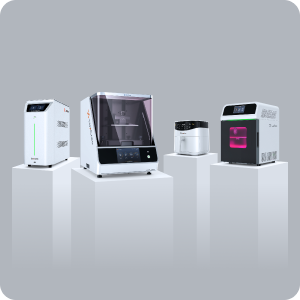
The regulatory advantage extends beyond material clearance to the complete manufacturing ecosystem. LuxCreo’s 4D Aligner™ system is FDA-cleared as a fully integrated solution, including:
- LuxDesign Software: FDA-validated AI-driven design platform generating optimized aligner geometry
- LuxFlow Software: Automated print preparation with resin-specific slicing parameters
- iLux Pro Dental Printer: FDA-cleared printing hardware with DLP technology
- iLuxWash Dental: Ultrasonic washing system with standardized cleaning protocols
- iLuxCure Pro: 360° UV curing system with temperature control optimizing mechanical properties
This end-to-end validation ensures that material properties, manufacturing processes, and post-processing procedures work together to deliver consistent, biocompatible aligners meeting all regulatory requirements.
Force Delivery and Clinical Predictability
The Force-Time Curve: Why Consistency Matters
Orthodontic tooth movement requires force delivery within a narrow optimal range. Too little force results in negligible tooth movement; excessive force causes root resorption and tissue damage. The ideal force profile involves:
- Optimal initial force: Just sufficient to initiate tooth movement without excessive patient discomfort
- Consistent force maintenance: Steady force delivery throughout the wear cycle
- Predictable force magnitude: Forces matching the digital treatment prescription
Thermoformed aligners fail across all three dimensions. They deliver excessive initial force (causing patient discomfort), followed by rapid decay (reducing tooth movement efficiency), with unpredictable magnitude due to thickness variations.
ActiveMemory™ Force Performance: Clinical Evidence
Research comparing force delivery between direct-printed aligners with ActiveMemory™ and thermoformed aligners documents dramatic differences:
- Initial Force: Direct-printed aligners deliver approximately 77% less peak force than thermoformed aligners—but this lower force falls precisely within the optimal orthodontic range, avoiding discomfort while maintaining efficacy.
- Force Stability: Direct-printed aligners maintain stable, predictable force across displacement ranges of 0.1–0.3mm, whereas thermoformed aligners demonstrate erratic force profiles with significant peaks and valleys.
- Force Retention: After 7 days of simulated wear, direct-printed aligners retain 95% of initial force and can fully recover via thermal activation. Thermoformed aligners retain only 60–70% of initial force, with irreversible loss.
- Clinical Translation: Superior force consistency directly translates to predictable tooth movement, reduced treatment deviations, and fewer refinement requirements.
Dimensional Accuracy and Fit Precision
Direct 3D Printing Accuracy Advantages
Dimensional accuracy profoundly impacts aligner effectiveness. Poor fit allows unwanted tooth movement, reduces retention, and compromises clinical outcomes.
Direct 3D printing delivers superior accuracy through several mechanisms:
- Elimination of Intermediate Models: Thermoformed aligners require 3D printing intermediate models, which introduce printing errors. Direct printing skips this step.
- No Thermoforming Distortion: The thermoforming process creates unpredictable shrinkage and stretching. Direct printing avoids this entirely.
- Digital Precision Control: Aligner geometry is controlled entirely by digital design parameters, with no manual manipulation introducing variation.
- Programmable Thickness Variation: Unlike thermoformed materials with uncontrollable thickness variation, direct printing enables intentional, programmed thickness gradients—thicker in high-force zones, thinner in comfort areas.
Clinical Data:
- Direct-Printed Aligners: >96% accuracy within ±0.1mm tolerances
- Thermoformed Aligners (in-house): ~75–80% accuracy within ±0.2–0.3mm tolerances
- Thermoformed Aligners (outsourced): ~70–75% accuracy within ±0.3–0.5mm tolerances
This 20% accuracy improvement translates directly to better fit, improved retention, enhanced comfort, and more predictable tooth movement.
Manufacturing Efficiency and Workflow Integration
The Complete 3-Hour Workflow
One of the most transformative advantages of direct 3D printing with ActiveMemory™ materials is manufacturing speed. The complete workflow—from intraoral scan to finished aligner ready for patient insertion—requires just 2.5–3.5 hours:
- Intraoral Scanning: Digital capture of patient dentition (10–15 minutes)
- Treatment Planning: Software generates orthodontic treatment plan (15–20 minutes)
- LuxDesign AI Design: One-click automated aligner shell design including gap filling, custom thickness, and attachment positioning (5 minutes)
- LuxFlow Slicing: Automated print preparation with resin-specific parameters (5–15 minutes)
- Direct 3D Printing: Layer-by-layer resin polymerization (60–90 minutes per aligner)
- iLuxWash Cleaning: Ultrasonic removal of uncured resin (15 minutes)
- iLuxCure Curing: 360° UV polymerization and property optimization (30 minutes)
- Delivery: Finished aligner packaged with instructions and accessories (10 minutes)
Total Elapsed Time: 2.5–3.5 hours with only 30–45 minutes of active operator engagement.
Labor Productivity Comparison
Per-aligner labor time dramatically differs between manufacturing approaches:
- Direct Printing: 1.5 minutes active operator time per aligner
- Thermoformed (In-House): 5.5 minutes active operator time per aligner
- Outsourced Thermoformed: 0.5 minutes clinic time + external lab labor
The 3.7x reduction in operator time per aligner, combined with same-day delivery capability, represents a fundamental operational transformation for dental practices and labs.
Cost-Effectiveness and Economic Impact
Per-Aligner Fabrication Cost Analysis
Direct printing with ActiveMemory™ materials delivers superior economics compared to thermoformed workflows:
- Direct Printing Cost Per Aligner: $6.00 (material + resin) + $50 software cost per case
- Thermoformed Cost Per Aligner: $10–12 per aligner (material + labor)
For a patient requiring 30 aligner pairs:
- Direct Printing Total: $410 ($6 × 30 aligners + $50 software)
- Thermoformed Total: $770 ($10–12 × 30 aligners + $50 software)
Cost Savings: 47% reduction with direct printing.
Material Waste Reduction
Environmental and cost benefits extend to material efficiency:
- Thermoformed Workflow: Entire plastic sheets purchased and cut, with majority becoming scrap. Physical models must be printed for each sequential aligner, generating substantial waste. Dust and particulates from manual polishing create workplace hazards.
- Direct Printing: Only resin needed for the actual aligner is used. Minimal waste generation. Supports are removed cleanly without dust. Digital Polishing™ eliminates manual finishing labor.
Research documents that direct printing reduces material waste by 80–90% compared to thermoforming.
Return on Investment for In-House Production
For orthodontic practices adopting in-house direct printing:
- Equipment Investment: iLux Pro Dental printer, post-processing equipment (~$50–80K)
- Break-Even Point: Approximately 150–200 cases (depending on practice volume)
- Annual Benefit (at 500 cases/year): $60,000+ savings ([$770 outsourcing cost – $410 in-house cost] × 500 cases)
Beyond direct cost savings, same-day aligner delivery increases case acceptance rates (patients prefer immediate treatment initiation) and improves patient satisfaction, translating to improved practice profitability beyond material cost reduction alone.
Patient Experience and Treatment Outcomes
Superior Comfort and Compliance
Patient experience directly impacts treatment success. ActiveMemory™ materials deliver measurable comfort advantages:
- Optimal Initial Force: Lower, consistent force avoids the excessive discomfort associated with thermoformed aligners. Patient comfort ratings: 8.5/10 vs. 6.5–7.5/10 for thermoformed.
- Consistent Force Throughout Wear Cycle: No “looseness” developing after a few days, ensuring consistent force delivery and tooth movement.
- Daily Thermal Rejuvenation: Patients can simply soak aligners in hot water daily to restore shape and force, providing a psychological sense of maintaining appliance “freshness”—improving compliance and satisfaction.
- Superior Optical Clarity: Digital Polishing™ delivers 80% higher clarity than competing methods, improving esthetics and patient confidence.
Improved comfort directly correlates with improved compliance—patients who experience discomfort are more likely to reduce wear hours or abandon treatment.
Clinical Outcome Improvements
The mechanical and material advantages translate to measurable clinical benefits:
- Reduced Refinement Rates: Superior accuracy and consistent force delivery minimize deviations from treatment plan, reducing mid-treatment refinement requirements
- Shorter Treatment Duration: Maintained optimal forces and continuous movement capability accelerate tooth movement
- Fewer Attachments Required: Precise force control often eliminates or reduces auxiliary attachments
- Enhanced Predictability: Digital design with programmable thickness enables custom force zones, improving treatment predictability
Early clinical observations suggest potential reductions in total treatment time and number of aligner sets required compared to thermoformed therapy.
Sustainability and Environmental Responsibility
Green Manufacturing Practices
Direct 3D printing with ActiveMemory™ materials aligns with growing environmental consciousness in healthcare:
- Minimal Material Waste: Direct printing uses only resin needed for aligners; eliminates large plastic sheets, model printing waste
- Smaller Facility Footprint: Chairside printing requires minimal space compared to thermoforming labs
- Reduced Energy Consumption: Compact equipment, no thermoforming ovens
- Digital Design Storage: Patient designs stored digitally enable rapid reprovisioning without stocking physical inventory
- No Chemical Waste: Thermoforming generates chemical waste from mold-making; direct printing avoids this entirely
The substantial material waste reduction—80–90% compared to thermoforming—represents meaningful environmental benefit as the technology scales across global dental practices.
Future Innovations and Emerging Material Science
Next-Generation Aligner Materials
The dental 3D printing materials field continues to evolve rapidly. Emerging innovations include:
- Enhanced Shape-Memory Formulations: Advanced polymer chemistry enabling broader temperature activation ranges and faster recovery kinetics
- Multi-Material Printing: Single-print systems capable of producing integrated attachments with varying stiffness, eliminating post-bonding labor
- Gradient-Stiffness Designs: Material science enabling force-zone optimization within single aligner
- Bioactive Additives: Incorporation of antimicrobial or anti-inflammatory compounds to enhance oral health
- Sustainability-Focused Polymers: Biodegradable resin options for temporary applications
Conclusion: The Clear Aligner Paradigm Shift
The evolution from thermoformed plastic aligners to direct 3D printing with advanced materials like ActiveMemory™ polymers represents far more than a manufacturing technology change—it reflects a fundamental shift in orthodontic materials science.
Thermoformed aligners, while establishing clear aligner therapy as an orthodontic standard, suffer from inherent material limitations: irreversible force degradation, uncontrollable thickness variations, poor dimensional accuracy, and extended treatment timelines. These limitations have defined clear aligner therapy for over two decades.
Direct 3D printing with ActiveMemory™ polymers addresses each of these limitations. Superior force retention (95% after 7 days vs. 60–70% for thermoformed), programmable thickness optimization, dimensional accuracy exceeding 96%, and same-day delivery capability represent a transformative leap in treatment capability.
For orthodontists and dental labs evaluating whether to adopt direct 3D printing technology, the clinical and economic evidence is compelling. FDA-cleared materials, superior mechanical properties, proven biocompatibility, reduced costs, improved patient satisfaction, and environmental benefits create a persuasive case for adoption.
As the clear aligner market continues its explosive growth—projected to reach $29.9 billion by 2030—direct 3D printing with next-generation materials will increasingly become the standard of care, redefining how modern orthodontists deliver treatment.
Additional Resources
For comprehensive information on direct 3D printing systems and ActiveMemory™ materials, explore these LuxCreo resources:
Subscribe to Our Newsletter
Be the first to get our latest updates and free trials!
Popular Resources



Follow Us


Featured Products
4D Aligner™
First Smart ActiveMemory™
Aligner
iLux Pro Dental Solution
Ultimate 1-Click Dental
Application Solution

LuxCloud Dental
Your One-stop Digital Dentistry
Platform